0


 English
 عربى


When a curtain maker or hotel buyer holds a length of lining up to the light, the first thing they look for is the black reverse side. Black blackout curtain lining is not a color preference; it is the functional core of a drapery system that must deliver darkness. The black side absorbs the light that passes through the face fabric, which is why it faces the window in almost every professionally specified blackout application. This guide explains why black linings work, how they are built, and which product details you should confirm with a fabric supplier before placing an order.
Content
- 1 Why Black Is the Standard Color for Blackout Linings
- 2 How Black Blackout Curtain Lining Is Constructed
- 3 Coated vs. Woven Blackout Lining at a Glance
- 4 Performance Checklist for Black Blackout Curtain Lining
- 5 Specifications to Include in Your Inquiry
- 6 Sourcing Black Blackout Curtain Lining from a Factory
- 7 The Bottom Line on Black Blackout Curtain Lining
Why Black Is the Standard Color for Blackout Linings
Light control is a matter of absorption, not just density. When sunlight reaches a white or pale lining, much of the light is reflected back toward the glass, where it bounces again and escapes around the edges of the curtain. The result is the familiar glow at the top, bottom, and sides of a supposedly blackout window treatment. A black surface absorbs the light instead of reflecting it, so the penetrating rays are stopped inside the fabric structure. That is why the coating on almost all functional blackout linings is dark gray or black, regardless of the face color.
This also explains an important distinction: blackout is a performance claim, not a color name. A white fabric can be fully blackout when it has a black coating or an opaque inner layer, and a black fabric can still leak light if the weave is too open. When a product specification says "black blackout curtain lining," it usually means a lining whose reverse side is black and whose construction is designed to block light at the finished weight.
How Black Blackout Curtain Lining Is Constructed
There are two dominant construction routes: coated linings and woven linings. Each has different economics, care behavior, and performance limits.
Coated blackout lining
Coated lining starts with a polyester base fabric, usually a plain weave of 100% polyester yarn. The reverse side receives several passes of an acrylic, polyurethane, or foam-based coating that fills the gaps between yarns and blocks transmitted light. The coating layer is what gives the lining its dark reverse. Coated linings are the most common and the most cost-effective way to reach full blackout at a moderate weight. Their weaknesses are breathability and long-term flexibility: a very heavy coating can feel stiff, and repeated washing can cause surface cracking if the formulation is not designed for laundry.
For a dependable standard product, many factories start their customers with a UV-resistant blackout curtain lining fabric as the baseline before moving to custom weights or finishes. It is also worth reading how internal structure and coating materials of blackout fabric affect the shading effect, because the same coating weight behaves differently on a loose weave than on a tight one.
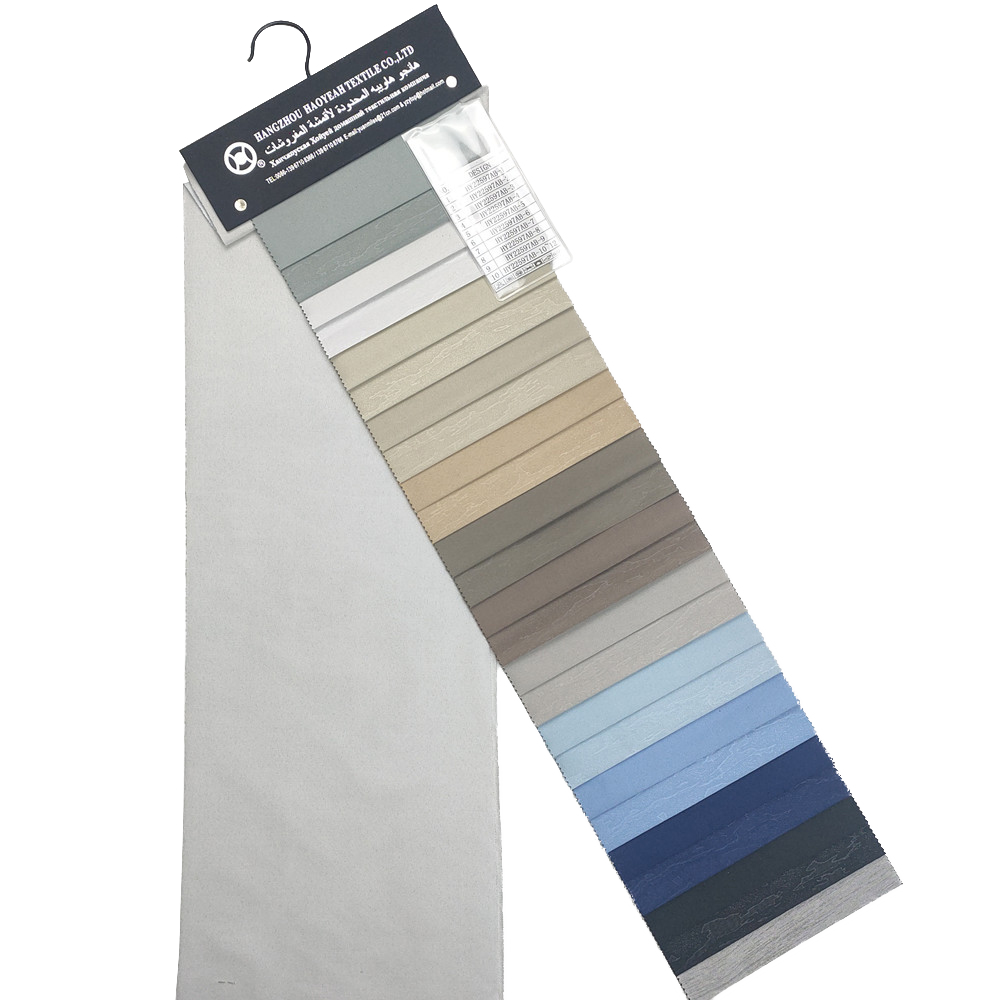 Sunshade Fabric Uvioresistant Blackout Curtain Lining Fabric for Curtain ManufacHaoyeah - China Customized Sunshade Fabric Uvioresistant Blackout Curtain Lining Fabric for Curtain Manufacturers and Factory, Custom Sun...View Product →
Woven and triple-weave blackout lining
Woven blackout lining achieves opacity through an extremely dense construction, often with an opaque middle layer sandwiched between the face yarns and the back yarns. This is the construction used when a buyer wants a white or colored face with a black reverse but no coating at all. Triple-weave linings drape better, breathe more, and survive laundering better than coated linings because there is no coating layer to crack, peel, or yellow. The price is higher, and the fabric is typically heavier. Hotels and residential projects that require frequent washing often prefer this route despite the higher unit cost.
The complete blackout curtain fabric range on a factory site will show both construction types, with weight and coating details listed for each product.
Coated vs. Woven Blackout Lining at a Glance
When you compare quotations, these are the practical differences to weigh against your application.
| Property | Coated blackout lining | Woven or triple-weave lining |
|---|---|---|
| Light blocking method | Acrylic, PU, or foam coating fills yarn gaps | Dense weave with an opaque middle layer |
| Typical weight range | Approximately 185 to 240 gsm | Approximately 240 to 360 gsm |
| Reverse side color | Usually black or dark gray | Can be specified as black or any color |
| Breathability | Lower because the coating limits air exchange | Higher because there is no coating layer |
| Wash durability | Good if washed cold; coating can crack if over-washed | Excellent; no coating to degrade |
| Typical cost | Lower per meter | Higher per meter |
Performance Checklist for Black Blackout Curtain Lining
Color alone does not make a lining reliable. Verify the following criteria with the factory before production starts.
- Light transmission rate. Full blackout should block at least 99% of visible light. Ask whether the figure is measured at the finished weight and after a wash cycle, because shrinkage and coating movement can change the result.
- UV resistance. The lining sits in direct sunlight for years. The polyester base is inherently UV-stable, but the coating must also be formulated to avoid chalking, yellowing, or loss of adhesion.
- Thermal insulation. A blackout lining adds an extra fabric layer to the window system, reducing heat gain in summer and heat loss in winter. The size of the air gap between the curtain and the glass affects the result more than the lining weight alone.
- Acoustic dampening. A dense lining absorbs a small amount of mid-frequency sound. The effect is modest and only meaningful when the lining is used in a fully pleated drapery system, not a flat panel.
- Washability. Confirm the maximum wash temperature, the drying method, and the number of cycles the coating can survive. Hospitality laundries normally use cold washing and line drying to protect the coating.
For projects that want UV protection and acoustic absorption in one product, the practical choice is a purpose-built lining such as a sound-insulation UV-resistant blackout lining roll, which combines both functions in a single fabric weight.
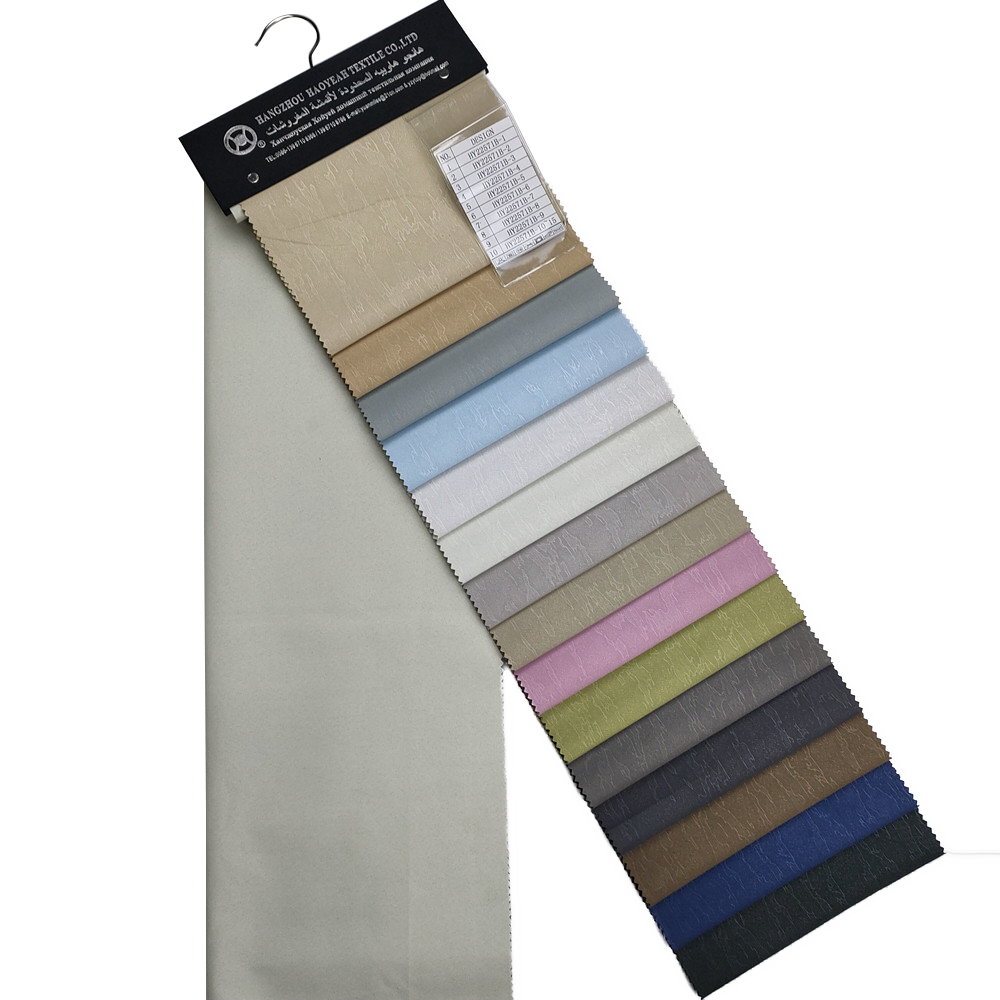 Sound Insulation Uvioresistant Blackout Curtain Rolls Lining Fabric for Curtain Haoyeah - China Customized Sound Insulation Uvioresistant Blackout Curtain Rolls Lining Fabric for Curtain Manufacturers and Factory, Cu...View Product →
Specifications to Include in Your Inquiry
When you contact a supplier, "black lining" is only a starting point. The following fields make your inquiry comparable across factories.
- Composition. Most blackout linings are 100% polyester; some are polyester-cotton blends with a different hand feel.
- Weight in grams per square meter. Standard blackout lining spans roughly 185 to 360 gsm. Higher gsm usually means better coverage and a fuller drape, but it also raises the cost per meter.
- Coating type and flexibility. Specify whether the coating must remain flexible after repeated washing, and whether a foam-free or low-odor formulation is required.
- Width and cutting. Confirm standard widths and whether custom widths or made-to-measure cuts are available for your production line.
- Face and reverse colors. The most common combination is a white or colored face with a black reverse. Some buyers request a fully black fabric that reads black on both sides.
- Fire retardancy. For hotels, offices, and public buildings, confirm whether the lining meets the flammability standard required in your destination market.
Sourcing Black Blackout Curtain Lining from a Factory
Because lining is a functional component, the supplier relationship matters as much as the fabric itself. Bulk buyers should confirm three things before committing to production.
Consistency comes first. The black coating must match from batch to batch, especially if the same lining is used across a project with multiple purchase orders. Ask how the factory controls shade variation and coating thickness during production. Sampling comes second. A physical swatch is still the fastest way to check opacity, hand feel, and coating adhesion. Fold the sample repeatedly along the same line to see whether the coating cracks at the crease. Lead time and stock come third. High-gram-weight linings usually have delivery windows that depend on the weaving and coating schedules, so a supplier with stock on hand can shorten the timeline.
Many suppliers run wholesale and custom production on the same product line. A factory that offers custom widths, colors, and gram weights directly to buyers simplifies quality control and reduces miscommunication. This is where sourcing directly from a factory partner such as Haoyeah pays off. The same lining that performs reliably in a hotel window can be adapted to a brand's specific color program without changing the construction.
The Bottom Line on Black Blackout Curtain Lining
Black blackout curtain lining performs one job: it absorbs light and keeps a room dark. The black reverse side is functional, but the construction and coating determine whether the lining keeps working after months of sunlight and repeated washing. Compare coated and woven constructions, verify the light transmission rate and gsm, confirm the coating's wash stability, and ask about custom widths and batch consistency. Those details separate a lining that only looks blackout on paper from one that delivers darkness in a finished curtain.