0


 English
 عربى


Content
- 1 Velvet Fabric Material: What Buyers Actually Need to Know
- 2 What Is Velvet Fabric Material?
- 3 How Velvet Fabric Material Is Constructed
- 4 Types of Velvet Fabric Material You Will Encounter
- 5 Curtain Velvet vs Sofa Velvet: The Real Differences
- 6 Key Specifications to Check Before You Order
- 7 Sourcing Velvet Fabric Material Without the Guesswork
Velvet Fabric Material: What Buyers Actually Need to Know
Ask a textile buyer what worries them most about velvet fabric material, and the answer usually comes down to performance. Will the pile flatten? Will the color shift under artificial light? Is the weight right for a floor-length curtain or a tight sofa cover? These are fair questions, because velvet is not one fiber or one weave. It is a construction that can be made from silk, cotton, linen, wool, or polyester, and each base changes how the fabric behaves in real use.
What Is Velvet Fabric Material?
Velvet fabric material is a woven textile with a short, dense pile on one side and a smooth backing on the other. The pile is created by weaving two layers face-to-face and then cutting them apart, which leaves a raised surface of clipped yarns. That structure gives velvet its signature softness and depth of color.
The key point for buyers is this: velvet describes how the fabric is made, not what it is made from. A poly velvet and a silk velvet share the same construction but feel, drape, wear, and cost very differently. For most curtain and sofa programs, a high-quality 100% polyester velvet is the practical choice because it combines the visual richness of velvet with easier care and consistent supply. Silk velvet, while luxurious, requires careful handling and a much larger budget; cotton velvet is breathable but creases and shrinks more easily.
How Velvet Fabric Material Is Constructed
Most commercial velvet today is produced on modern looms using the double-cloth method. Two ground warps are woven simultaneously with an extra pile warp, and a blade cuts the pile yarns apart. The density of the pile depends on the number of pile warp threads per centimeter and the height of the pile after cutting. A higher thread count means a denser, more durable velvet that resists crushing and shows less of the backing weave.
For upholstery and curtain applications, a tighter pile with a lower height generally resists crushing and impression marks better than a long, loose pile. Weight is a reliable indicator. Curtain velvet typically falls between 220 and 320 gsm, while sofa velvet ranges from 300 to 620 gsm. A seating fabric below 500 gsm may show wear faster on high-use pieces such as armrests and seat cushions. Heavier velvet also tends to hang differently, so a weight that works for curtains will not necessarily work for a two-seater sofa.
Types of Velvet Fabric Material You Will Encounter
Knowing the names used in the market helps you compare options. The same base velvet can be finished in several ways, and that finishing determines the final look and performance.
Plain Velvet
Plain velvet has a smooth, uniform surface with a solid color. It is the most versatile type for both curtains and sofas, and it accepts different finishes such as water resistance or blackout coating. A 100% polyester plain Holland velvet curtain fabric with a soft hand is a safe starting point for large windows because it drapes evenly and does not compete with bold furniture. It also works well for tailored valances and Roman shades, where a uniform texture highlights the geometry of the window treatment.
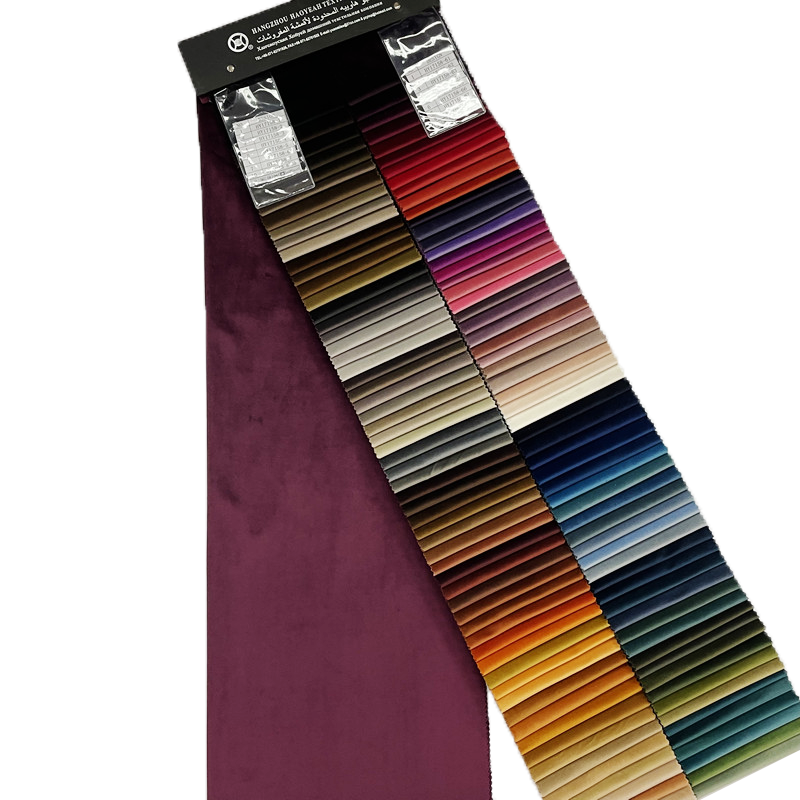 Super Soft Polyeste Plain Holland Velvet Upholstery Curtain Fabric ManufacturerHaoyeah - China Customized Super Soft Polyeste Plain Holland Velvet Upholstery Curtain Fabric Manufacturers and Factory, Custom Super So...View Product →
Embossed Velvet
Embossed velvet is heat-stamped with a pattern that presses the pile down in selected areas. The result is a raised, multi-dimensional design. 3D embossed velvet is widely used for classic European-style curtains and for sofa covers that need texture without extra weight. For example, a 100% polyester super-soft knitted imitation cotton fleece embossed sofa fabric gives the look of carved velvet while remaining easy to maintain. Because the pattern is pressed, the fabric keeps its decorative effect on curved corners and along seams better than printed alternatives.
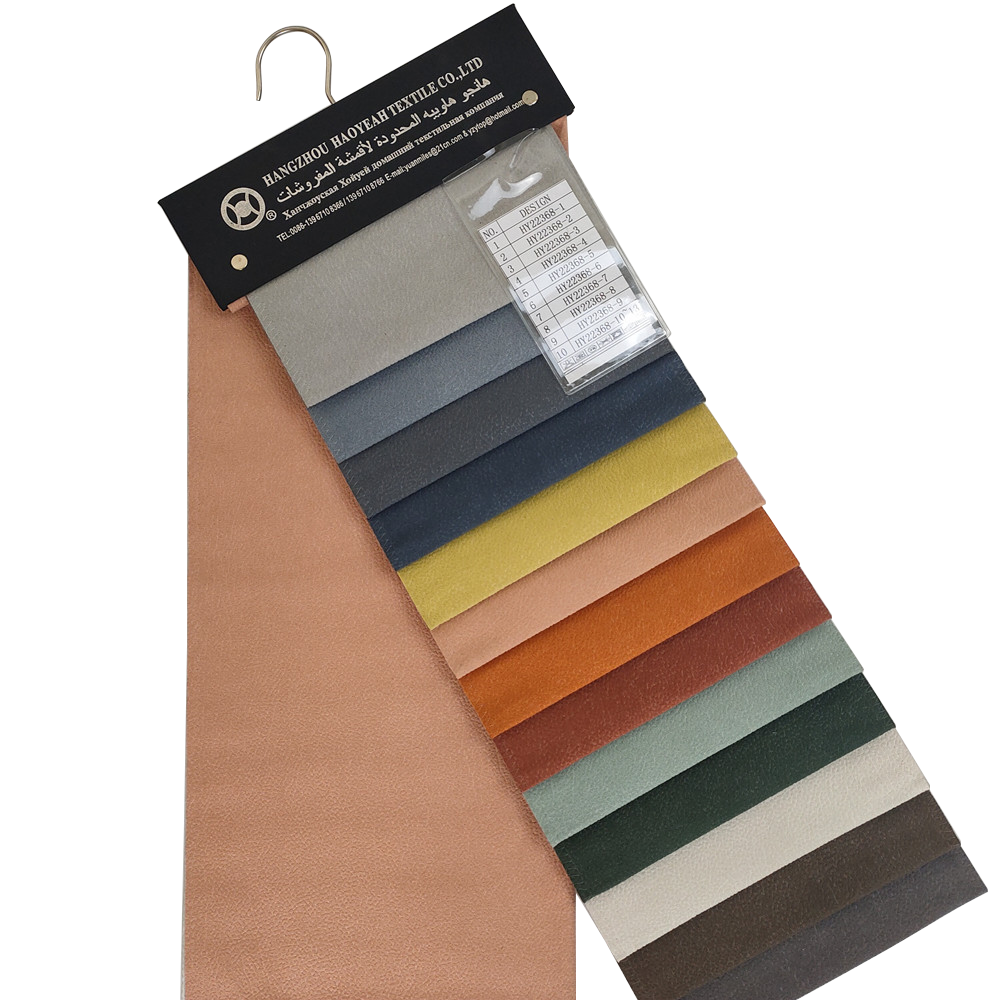 Polyester Super Soft Knitted Imitation Cotton Fleece Embossed Sofa Fabric ManufHaoyeah - China Customized Polyester Super Soft Knitted Imitation Cotton Fleece Embossed Sofa Fabric Manufacturers and Factory, Custom P...View Product →
Bronzed or Foil Velvet
Bronzed velvet undergoes foil printing to deposit a metallic layer on the surface. It can be all-over or patterned, and it adds a glamorous sheen that catches light. This type is popular for formal living rooms and hotel curtains. A 100% polyester foil luxury bronzing silk Italian velvet curtain fabric is a good example of how foil finishes mimic expensive metallic brocade at a lower cost. The sheen changes with the angle of light, so always check a full-length sample before ordering large yardage.
 Polyester Foil Luxury Bronzing Silk Italian Velvet Fabric for Curtain ManufacturHaoyeah - China Customized Polyester Foil Luxury Bronzing Silk Italian Velvet Fabric for Curtain Manufacturers and Factory, Custom Polyes...View Product →
Crushed, Jacquard, and Cut Pile Velvet
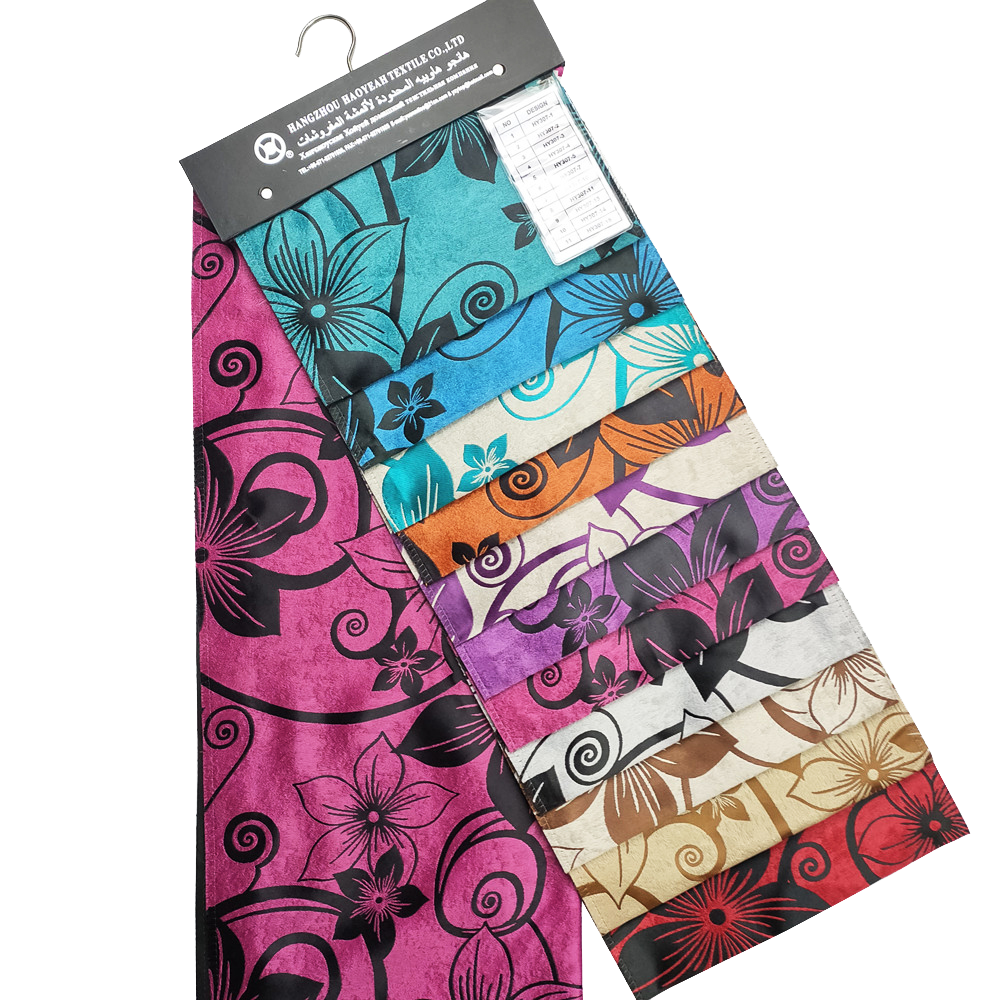
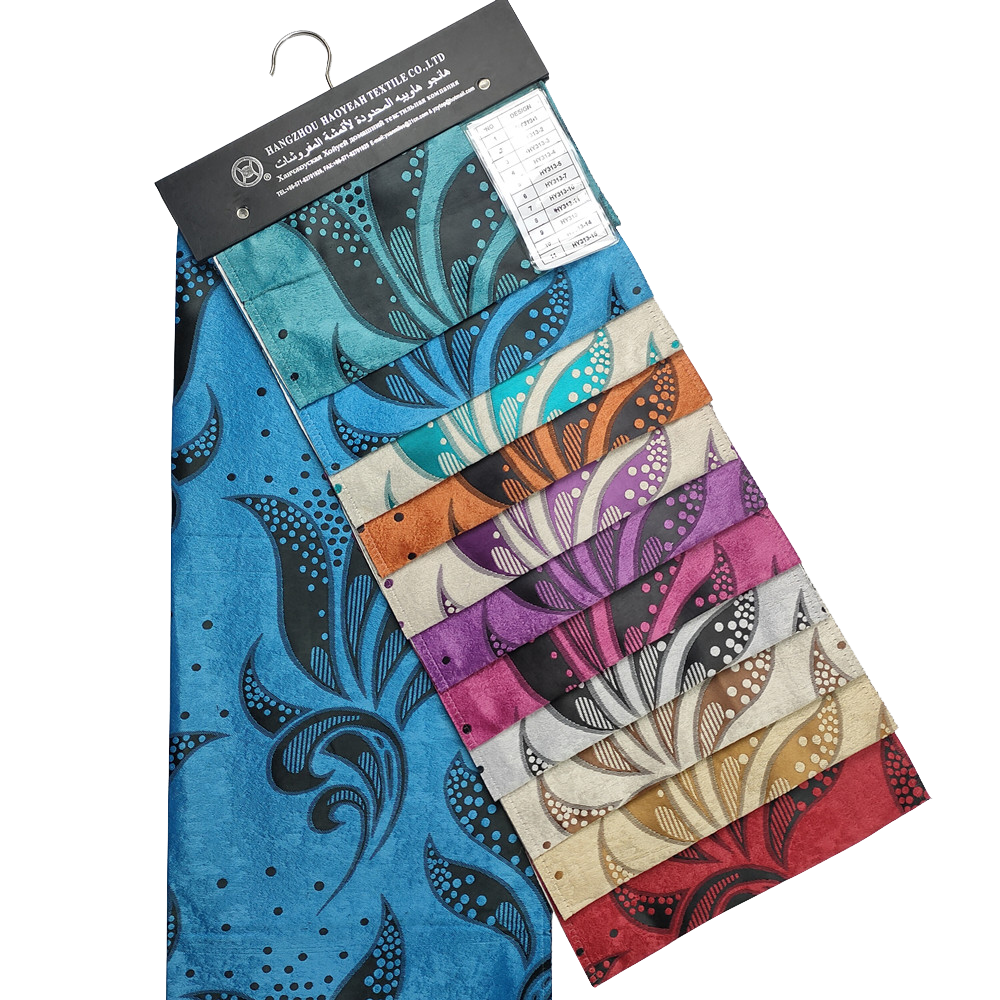
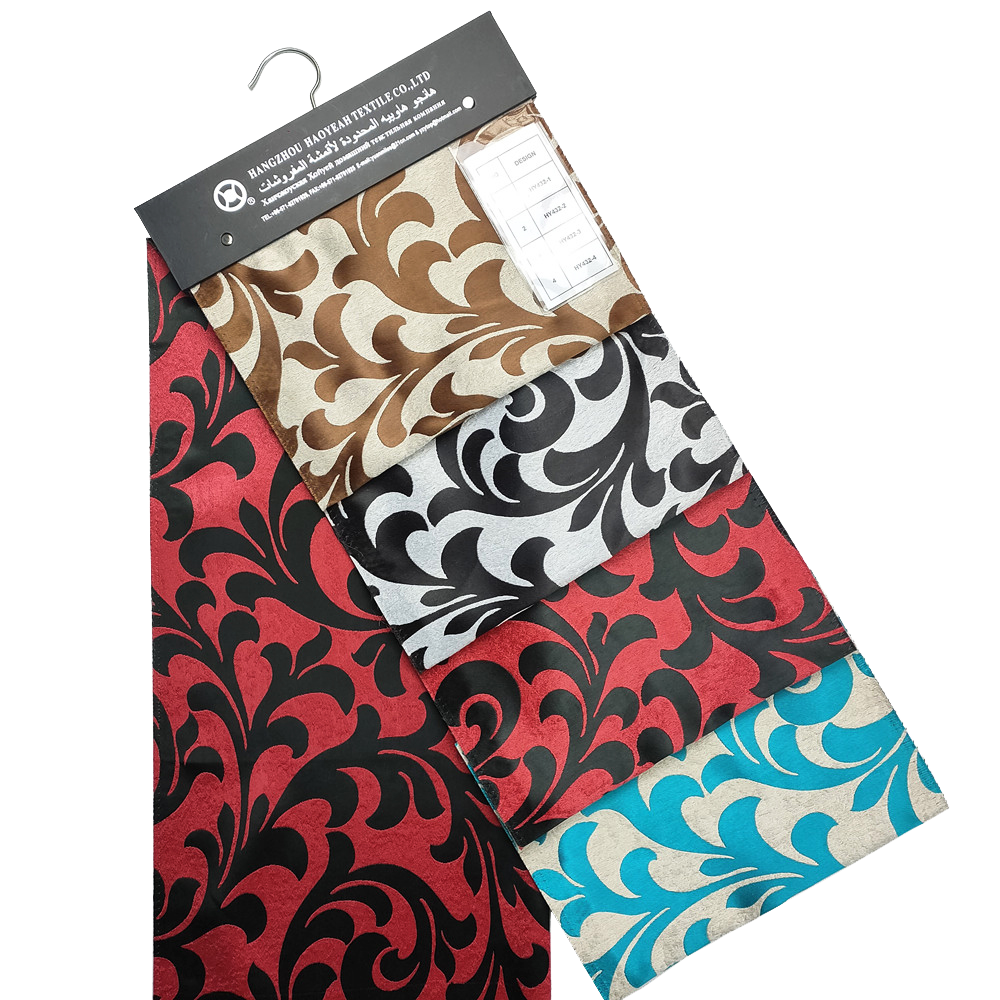
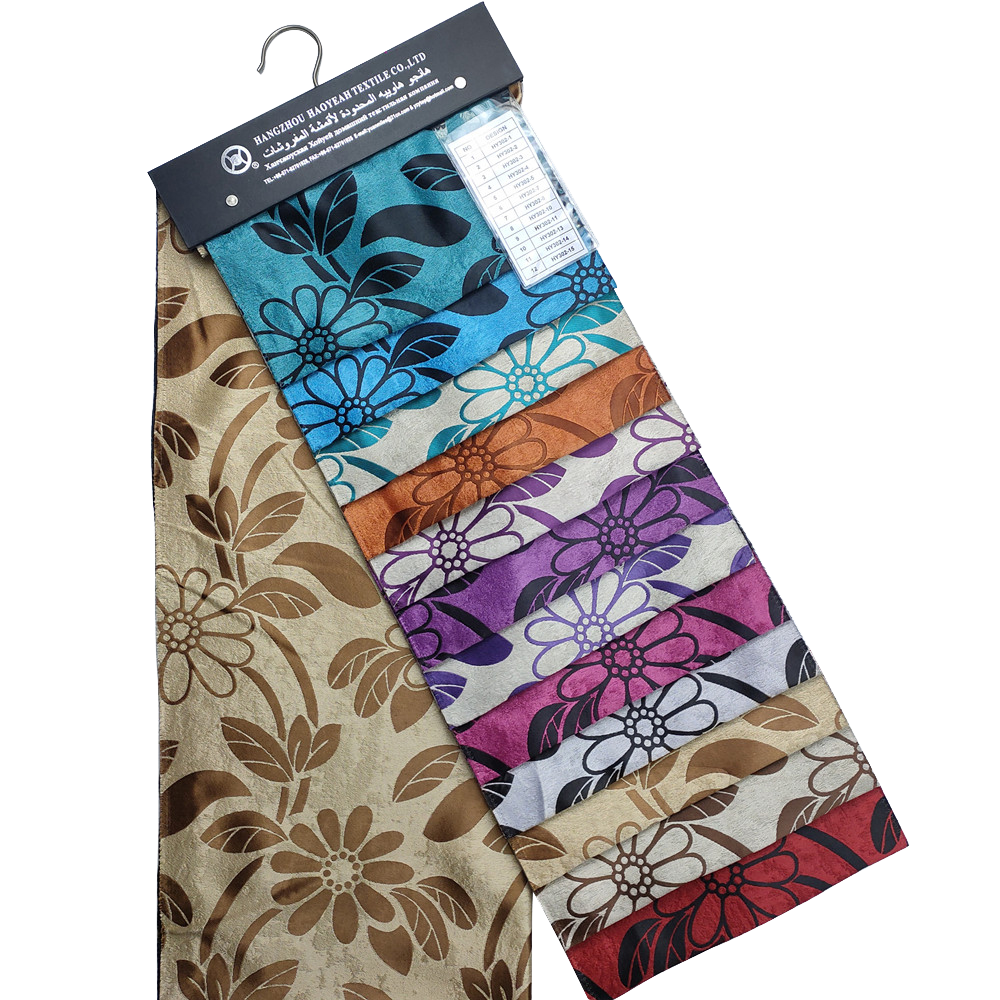
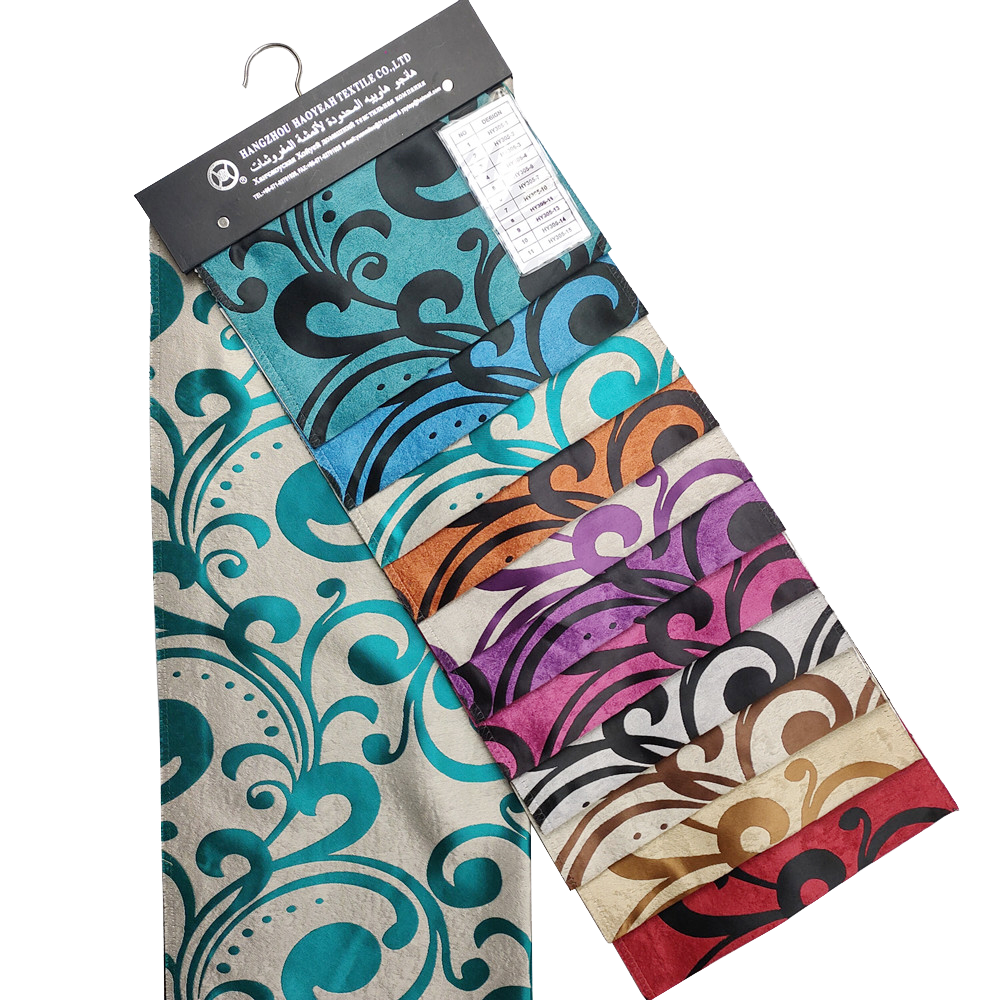
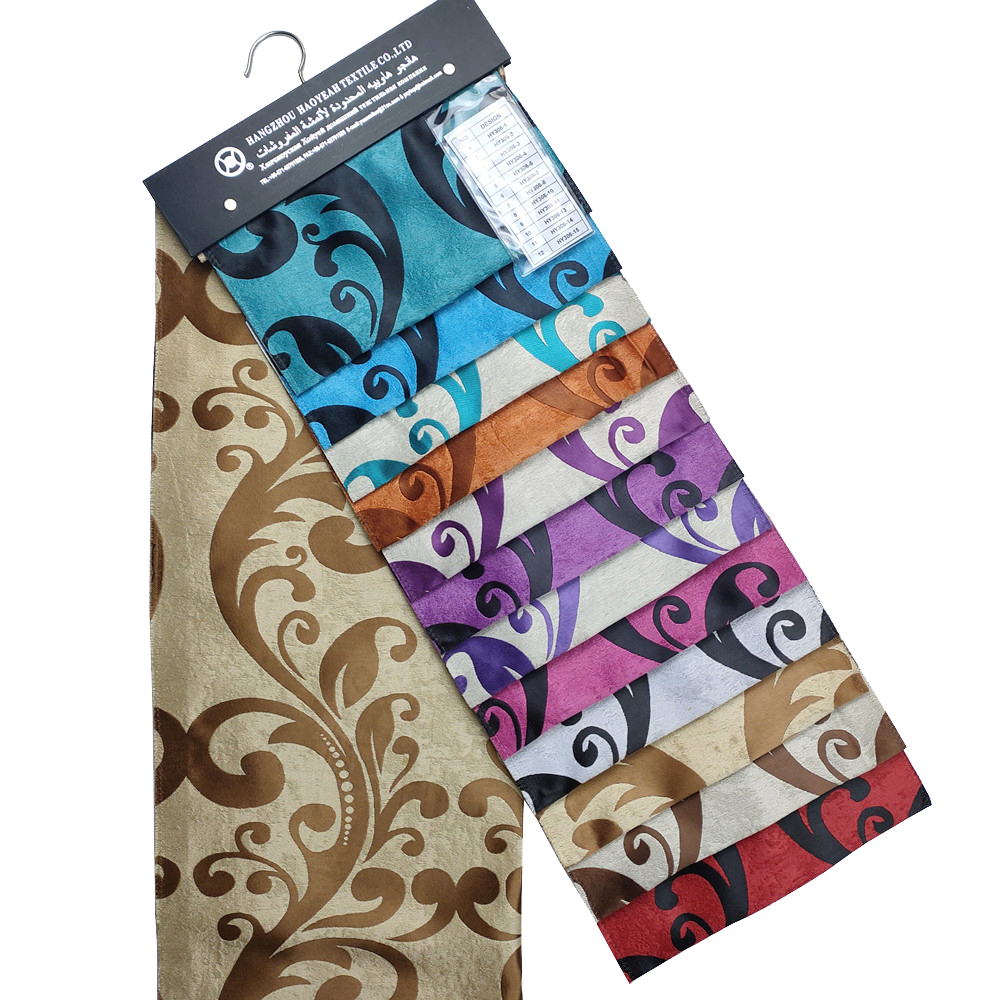
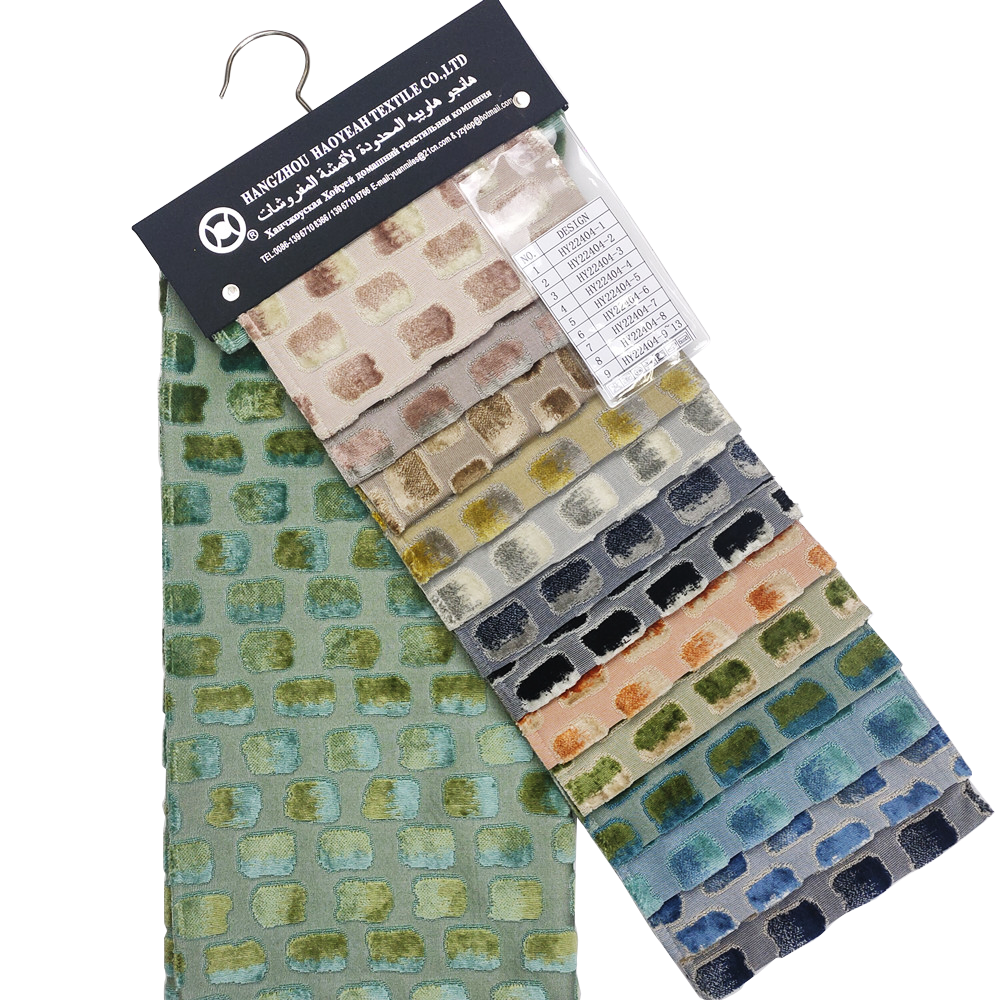
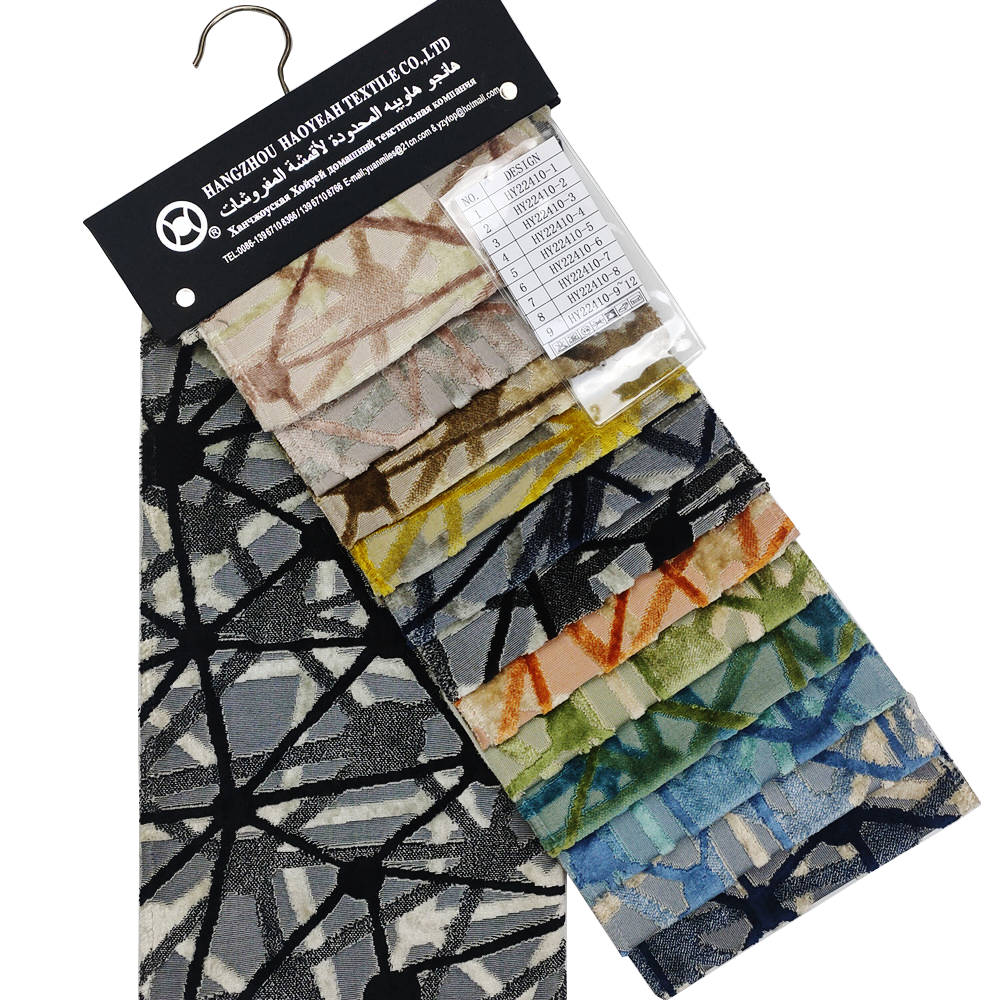
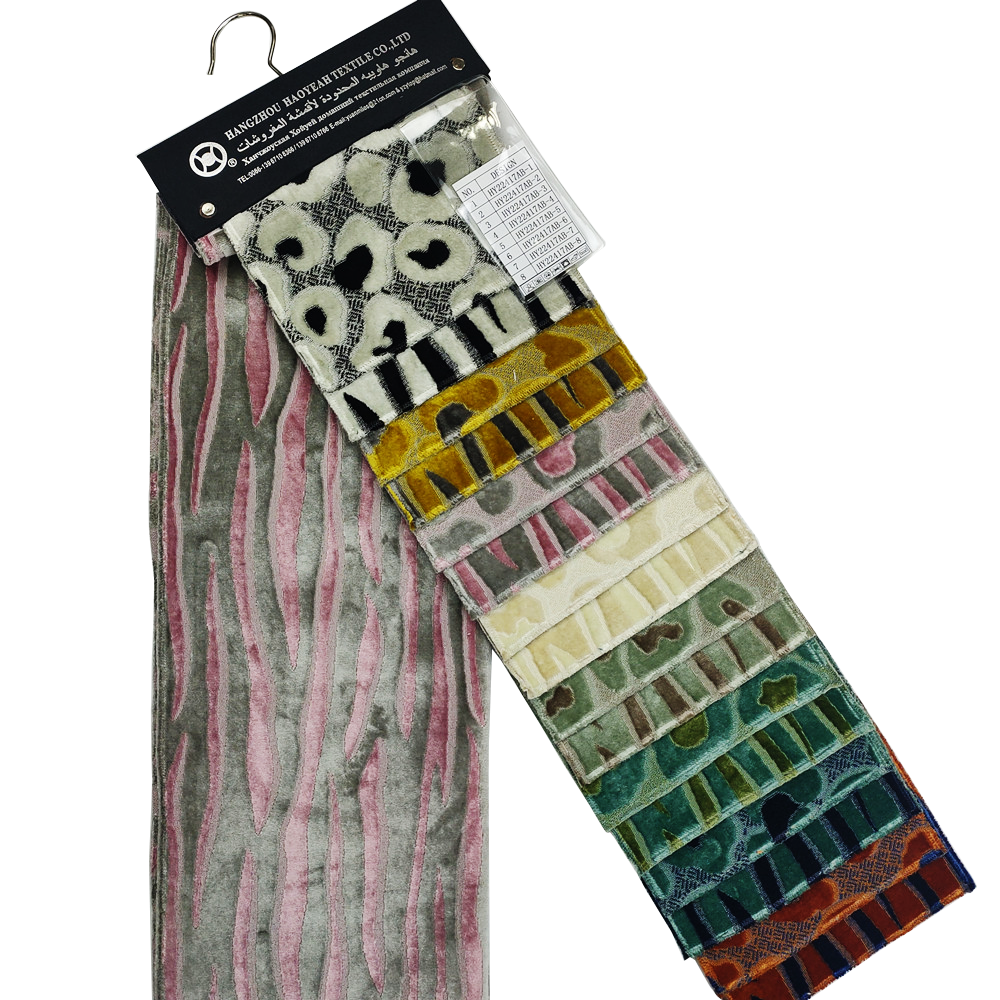
Crushed velvet is produced by twisting the fabric while wet, creating a permanent rippled texture that reflects light irregularly. Jacquard velvet weaves pattern and pile together, which is common in upholstery and gives a dimensional floral or geometric design. Cut pile velvet is a sofa-specific construction where the pile is cut to create a distinct colored or textured pattern, often using yarn-dyed threads. These variations are not interchangeable; crushed velvet suits relaxed interiors, while jacquard and cut pile work better in traditional or structured settings.
Curtain Velvet vs Sofa Velvet: The Real Differences
Velvet fabric material behaves differently depending on the job. Curtains are vertical; they need good drape, moderate weight, and often a darkened back or blackout coating. Sofas are horizontal; they get rubbed, stretched, sat on, and cleaned. The decision matrix is therefore not just about color.
| Property | Curtain velvet | Sofa velvet |
|---|---|---|
| Typical weight | 220–320 gsm | 300–620 gsm |
| Pile height | Short to medium for crisp drape | Dense and low for abrasion resistance |
| Key performance | Drapability, light blocking, color depth | Abrasion resistance, pile recovery, seam strength |
| Common fiber | 100% polyester or polyester blends | 100% polyester, sometimes with cotton |
| Care | Mild machine wash or dry clean | Vacuum and spot clean, professional cleaning |
A common mistake is using a beautiful curtain velvet on a sofa; the pile crushes quickly at the seams. Another is choosing a heavy upholstery velvet for curtains; it hangs stiffly and may not gather well. Always match the product specification to the end use, not just to the sample swatch. If you are designing a coordinated room set, order curtain and sofa velvets from the same supplier family so that the shades remain consistent across the entire space.
Key Specifications to Check Before You Order
When you evaluate velvet fabric material for commercial use, a few numbers matter more than the pattern name. These specifications determine whether the fabric will survive real-world use and whether your clients will be satisfied.
Fiber Content
Polyester velvet is the backbone of the curtain and sofa trade. It offers strong color fastness, resistance to shrinking, and a stable supply. Cotton or linen blends add natural breathability but can crease, shrink, or fade more easily. Silk velvet exists mainly in high-end decor; it requires careful handling and a much larger budget. For hospitality projects, polyester is almost always the right answer because it meets stricter fire and cleaning requirements without special treatment.
Weight and Pile Density
Check the grams per square meter (gsm) on the supplier’s tech sheet. For sofas, look for at least 450 gsm if the fabric will be used on frequently occupied seating. For curtains, 240 to 300 gsm is generally enough for good opacity without making the fabric heavy to draw. Pile density is not always printed, but you can compare by pressing two swatches side by side; the denser one will feel firmer and show less backing. Also check the pile direction — velvet has a nap, and the color appears darker when brushed one way and lighter the other. Plan for extra fabric if all panels must match the same nap direction.
Finish and Backing
Finishes change the performance dramatically. A blackout coating on the back of a velvet curtain blocks light and adds insulation. A glue-pressed or water-resistant finish on sofa velvet helps repel spills and stains. Bronzing and embossing alter the look but may reduce the fabric’s flexibility, so ask the supplier how the finish behaves on corners and seams. For custom programs, confirm whether the finish can be applied after dyeing or if it must be integrated during the weaving process; this affects lead times and order minimums.
Sourcing Velvet Fabric Material Without the Guesswork
Choosing the right material is only half the process. The other half is finding a supplier who can deliver consistent color, stable quality, and honest specifications. When evaluating a factory or wholesaler, ask for physical swatches, check the gsm under a scale, and test the pile recovery by pressing your thumb into the fabric. A reputable supplier will also tell you the finish limitations—for example, whether a bronzing finish can withstand repeated dry cleaning or whether a blackout coating will crack along sharp folds.
At Hangzhou Haoyeah Textile, we build our production around the two areas where velvet fabric material is most often specified: curtain fabrics and sofa fabrics. Our velvet curtain fabric range covers plain, embossed, bronzed, and glue-pressed constructions, while the velvet sofa fabric collection is engineered for daily seating with dense pile and up to 620 gsm weights. We also support customization in color, pattern, and finish, with factory direct pricing for wholesalers and furniture manufacturers. If you are working on a sofa program, our cleaning and maintenance guide for velvet sofa fabric is a practical reference to share with your end customers.
Velvet fabric material is a versatile category with very different behavior depending on fiber, weight, pile density, and finishing. If you define your application first, measure the specifications, and choose a partner who understands both curtain and sofa production, velvet can be one of the most rewarding fabrics to work with. Start with the end use, verify the numbers, and request swatches before committing to a bulk order.